
There is a specific kind of ritual that moves you, and another kind that leaves you feeling vaguely hollow, as though you went through the motions without anything actually shifting. You may have wondered why. The difference is rarely about effort or sincerity. It is often about resonance: whether the tools and practices you are using are actually speaking the same language as the elemental quality you need to work with. Elemental ritual pairing is the art of matching intention to material, so that the objects, scents, textures, and practices you bring into a ritual do not scatter your attention, but deepen it.
This article introduces a framework for understanding that resonance, grounded in the four classical elements as living forces rather than symbolic categories. If you are new to the elemental framework itself, the four elements ritual practice guide is a generous foundation for everything that follows here.
Two Principles: Like Calls to Like, and Elemental Medicine
Before moving to the element-by-element toolkit, it helps to understand two different approaches to elemental pairing, because they are not the same thing, and choosing between them is itself a form of self-knowledge.
Like Calls to Like
The first principle is resonance: working with your dominant element, or with the element that matches the quality you want to amplify. If you are an earthy, grounded person preparing for a ritual of deep presence and body-based stillness, Earth tools (root botanicals, stones, heavy textures, the scent of soil or vetiver) will align with what is already moving in you and deepen it. If you carry a lot of Fire and you are working with a ritual of will, courage, or digestion of a significant life moment, Fire tools (warming spices, candle flame, activating breathwork) call to something that already knows the way.
Like calling to like works beautifully for amplification, for deepening into a quality you already have access to, or for ritual work where you want to build on existing momentum. It is also deeply useful for honoring your elemental nature, for feeling at home in your own practice.
Elemental Medicine: Working with What You Lack
The second principle is sometimes called elemental medicine, working with the element that is missing or depleted rather than the one you already embody. If you carry very little Water in your birth chart and you consistently find emotional access difficult, bringing Water tools into your ritual creates a kind of invitation: a gentle call from the body toward what the psyche has not yet integrated. If your dominant nature is highly airy and mental, and you tend toward dissociation under stress, Earth medicine helps anchor you.
Elemental medicine often requires more patience than like-calls-to-like practice. The body may feel unfamiliar with the element being introduced. The invitation is to stay curious rather than forcing the encounter. Research on herbal materia medica reflects a similar principle in plant-based traditions: plants with cooling, moistening, warming, or drying qualities are paired with constitutional patterns in ways that address what is out of proportion rather than simply matching what is present.
Both approaches are valid. Many experienced practitioners move fluidly between them, using like-calls-to-like for maintenance and celebration, and elemental medicine for the moments of active restoration and growth.
Earth Element Pairings
What Earth Responds To
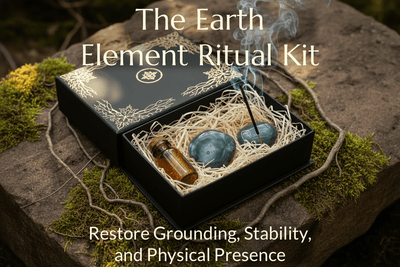
Earth is the element of weight, solidity, and patience. The body recognizes it through texture and scent: the heaviness of stone, the slow spread of rich oil into skin, the dark mineral quality of vetiver, patchouli, cedarwood, or oakmoss. Earth responds to practices that are slow, repetitive, and grounding, walking barefoot, tending plants, working with hands in soil, weight-bearing postures, long slow exhalations that let the belly drop.
For Earth ritual tools, natural textures matter: unpolished stone, clay, rough-cut crystal (smoky quartz, obsidian, moss agate), salt, and root botanicals such as burdock, valerian, and ashwagandha. In anointing practice, Earth-aligned oils carry weight and depth of scent. The Rooted Energy anointing oil works beautifully as both a like-calls-to-like amplifier for grounded Earth natures and as elemental medicine for those who are floating above their own bodies.
For a full Earth ritual practice, the Earth element grounding rituals guide explores the sensory landscape of Earth in depth.
Fire Element Pairings
What Fire Responds To
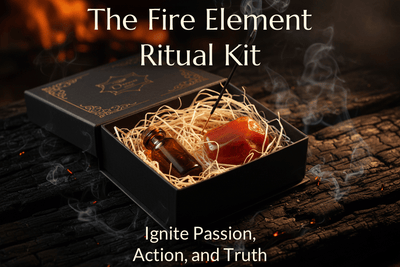
Fire is the element of activation, will, and metabolic movement. The body recognizes it through heat: the prickle of cinnamon on the skin, the flare of a candle flame held in the gaze, the quickening of the breath during activating movement. Fire responds to practices that build energy rather than disperse it, trataka (candle-gazing), solar breathwork, bold physical movement, the deliberate ritual of writing an intention and burning it.
Fire botanical correspondences lean warming and spicy: cinnamon, ginger, black pepper, turmeric, frankincense, and dragon's blood resin. In anointing, Fire oils tend to have a top-note quality of sharpness and heat. The Infinite Fire anointing oil may support the body in accessing its own will and vitality, useful both as an amplifier for Fire-dominant natures and as elemental medicine when motivation has gone quiet.
The Fire element rituals guide covers both activation practices and the important shadow side of excess Fire.
Water Element Pairings
What Water Responds To
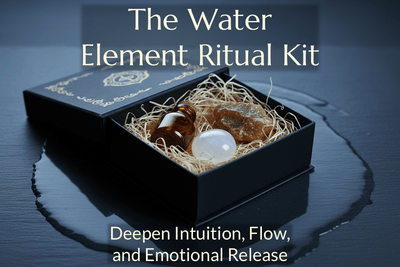
Water is the element of emotion, intuition, and the unconscious. The body recognizes it through softening: the release of the tension through warm bathwater, the slow opening and softening of the heart during emotional expression, the feeling of being held by something larger. Water responds to practices that create spaciousness for feeling: ritual bathing, moon-gazing, deep journaling, somatic practices that invite emotion to move through the body rather than being stuck and stagnant.
Water botanical correspondences tend toward the floral, lunar, and cooling: rose, blue lotus, jasmine, mugwort, violet, and sea botanicals. The qualities of Water practice are receptivity, release, and depth. Bath rituals are among the most potent Water practices, because they place the body literally inside the element. The Trance State Somatic Soak is crafted specifically for Water's depth, supporting the body in accessing its own intuitive, emotional intelligence.
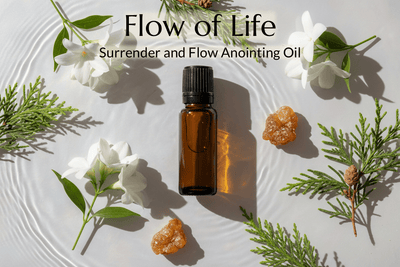
In anointing, Water oils carry a quality of softness and emotional fluency. The Flow of Life anointing oil may create conditions for emotional movement and release, particularly useful as elemental medicine for those whose Water tends toward stagnation or numbness.
For Water practices in full, the Water element rituals guide is a complete companion.

Air Element Pairings
What Air Responds To
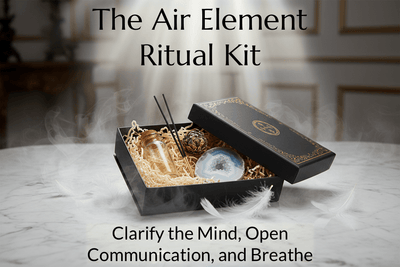
Air is the element of thought, breath, and the quality of spaciousness in the mind. The body recognizes it through lightness: the clarity that follows a long exhale, the feeling of the mind releasing a burden it has been carrying without knowing. Air responds to practices that involve the breath directly: pranayama, circular breathing, vocal toning, singing, and any practice that physically moves air through the body with intention.
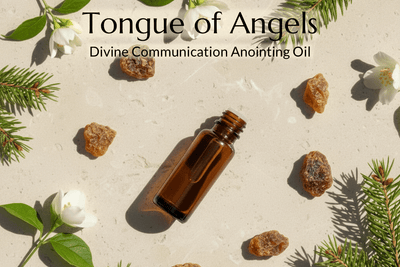
Air botanical correspondences tend toward the aromatic, light, and clear: lavender, eucalyptus, peppermint, rosemary, and white sage. Sound tools, bells, singing bowls, and tuning forks, are among Air's most resonant ritual companions, because sound travels on air and enters the body through vibration. The Tongue of Angels anointing oil may support the throat and the clarity of expression, useful for both Air-dominant natures and those in periods of communicative depletion.
The Breathwork Somatic Soak brings Air into the ritual bath, using botanicals and mineral salts chosen to support respiratory clarity and nervous system spaciousness. For the full Air practice landscape, the Air element clarity rituals guide is the deep resource.
Building a Multi-Element Ritual
Life rarely calls for just one element at a time. A ritual designed for a major life transition might call for Earth to provide ground, Fire to activate courage, Water to support the emotional processing of what is ending, and Air to help the mind release the old story. This is not complicated. It simply means that the ritual includes one representative from each element's domain: a stone, a candle, a tub of water, and a smoke tool or feather, for instance.
The key in multi-element work is not accumulation, but intentionality. Each tool present in the ritual space should have a clear relationship to the intention. A cluttered altar scatters attention; a open and minimal one focuses it. You might find it useful to identify which element is the primary invitation of the ritual, the one doing the heaviest lifting, and let the others play supporting roles.
The full Sacred Ritual Kits collection offers curated multi-element sets designed with exactly this kind of elemental coherence in mind. The Anointing Oils collection and Somatic Elemental Bath Soaks are each organized by elemental quality, making it easy to build a toolkit that speaks a consistent elemental language.
Starting With One Element
If you are new to elemental ritual, or if the framework is starting to feel complex, the most useful thing is to simplify: choose one element, follow what calls you, and work with it for at least one full lunar cycle before expanding. The body learns through repetition. A practice that you return to consistently, even briefly, will teach you more than a complex protocol attempted once.
Notice what shifts. Notice what opens. The practice of assembling a ritual toolkit is itself a form of self-knowledge: what do you reach for? What do you avoid? What objects feel alive in your hands and which ones feel inert? These responses are information. Let them guide the curation of your own elemental practice, knowing that it will be different from anyone else's, because your elemental nature is specific to you. If you are unsure where to begin, consider exploring your elemental signature as a starting point, and let your dominant element be your first teacher.