
Sacred Bathing, Touch, and Space
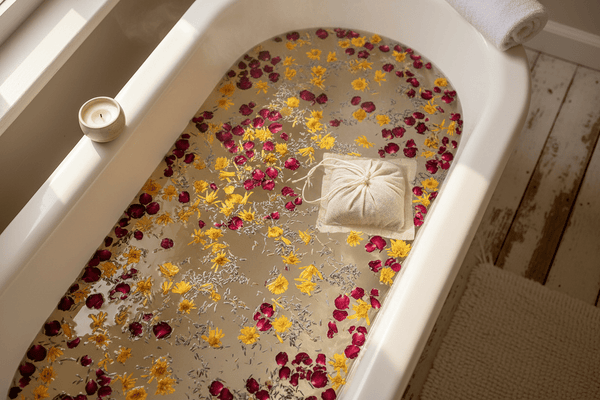
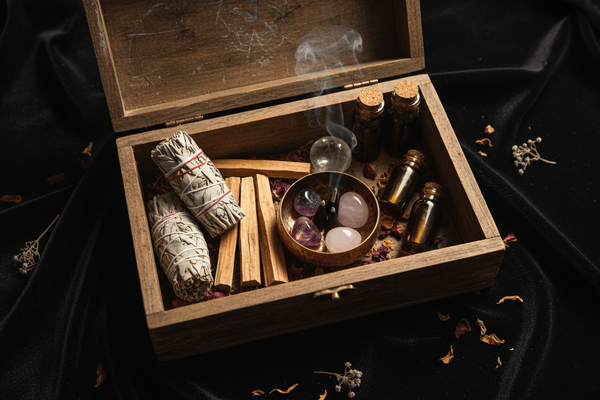
Three of the most physical ways to practice ritual: soaking, touch, and the spaces we build around both. This pillar covers ritual baths, self-massage traditions like Ayurvedic abhyanga, and how to create a personal altar, even a small one, that your nervous system learns to recognize as a cue to slow down. No prior experience required, every term is explained in plain language as it comes up.
The Complete Ritual Bath Guide
The foundational guide behind the bathing section of this pillar: how to turn an ordinary bath into a ritual with intention, timing, and a few simple additions.
Read the GuideSacred Bathing
Eleven articles on ritual bathing, covering moon-phase soaking, herbal and mineral additions, emotional release, temperature-based practices, and how to time and set up a sacred bath.
The Complete Ritual Bath Guide
Read article →Moon Bath Ritual: Full Moon and New Moon Soaking
Read article →Dream Bath Ritual: Evening Soaking for Sleep and the Subconscious
Coming soonHerbal Bath Soak Guide: Botanicals and Their Ritual Properties
Coming soonBath Ritual for Grief and Emotional Release
Coming soonThe Mineral Bath: Salts, Clays, and Their Ritual Properties
Coming soonBath Ritual for Energetic Clearing and Renewal
Coming soonCold and Contrast Water Ritual: The Nervous System Benefits
Coming soonBath Ritual Timing: Moon Phases, Days of the Week, and Seasonal Alignment
Coming soonBath Altar and Ritual Environment: Creating the Perfect Sacred Bath Space
Read article →Chakra-Aligned Bath Rituals: Soaking With Elemental and Energetic Intention
Coming soonRitual Massage and Sacred Touch
Twelve articles on self-massage and therapeutic touch, from the science of why touch calms the nervous system to Ayurvedic traditions, elemental customization, and grief-focused practice.
The Art of Ritual Self-Massage: A Complete Guide
Coming soonAbhyanga: The Ayurvedic Self-Massage Tradition and Its Modern Practice
Coming soonWhy Touch Heals: The Neuroscience of Therapeutic Self-Touch
Read article →Herbal Infused Oil Massage: How Botanical Oils Deepen the Practice
Coming soonMorning Ritual Massage: Awakening the Body With Intention
Coming soonEvening Ritual Massage: Nervous System Wind-Down and Integration
Coming soonElemental Self-Massage: Customizing Your Practice to Your Constitution
Coming soonMarma Points: Ayurvedic Energy Points and Their Ritual Applications
Coming soonChakra Massage: Applying Herbal Oils to the Body's Energy Centers
Coming soonScalp and Face Ritual Massage: Cranial and Sensory Grounding Practices
Coming soonRitual Massage for Grief and Emotional Release
Coming soonPartnered Ritual Massage: Sacred Touch as a Practice of Connection
Coming soonAltar and Sacred Space
Eleven articles on building and maintaining a personal altar, covering elemental representation, ancestral and seasonal arrangements, sacred objects, and the nervous system science behind why a dedicated space matters.
How to Build an Altar: A Complete Guide to Sacred Space
Read article →The Elements on an Altar: Earth, Fire, Water, and Air Representations
Read article →Moon and Sun Altar Arrangements for Lunar and Solar Ritual
Read article →Ancestral Altar: Honoring Lineage in Your Sacred Space
Read article →Seasonal Altar Guide: Shifting Your Sacred Space Through the Year
Read article →Travel Altar: How to Maintain Sacred Space on the Go
Coming soonThe Altar as a Nervous System Cue: The Science of Sacred Space
Read article →Sacred Objects: How to Choose and Consecrate Your Altar Items
Read article →Crystals and Stones on the Altar: Properties and Intentions
Coming soonCaring for Your Altar: Cleansing, Renewal, and Seasonal Refresh
Read article →Chakra Altar: Designing Sacred Space Around the Seven Energy Centers
Coming soonFrequently Asked Questions
What makes a bath into a ritual instead of just a bath?
A bath becomes a ritual when you add intention, meaning you decide in advance what the soak is for, whether that's winding down, marking a transition, or simply slowing down enough to notice your own body. The water and the herbs support the experience, but the shift from routine to ritual happens in that moment of deciding why you're getting in.
What is ritual self-massage?
Ritual self-massage is the practice of using your own hands, often with a botanical oil, to touch and care for your body with intention rather than rushing through it. It draws on traditions like Ayurvedic abhyanga, and its value comes from combining physical touch, which the nervous system reads as safety, with a few unhurried minutes of full attention on yourself.
Why does self-touch calm the nervous system?
Skin contact, even from your own hands, activates nerve pathways associated with safety and calm, which is part of why a hand on your own chest or a slow self-massage can measurably lower stress in the body. This is a documented physiological response, not just a psychological one, which is why the practice works even on days you don't feel like it will.
Do I need a lot of space or special items to build an altar?
No. An altar can be as small as a single shelf, windowsill, or corner of a dresser holding a few meaningful objects, like a candle, a stone, or a small dish. What matters is that the space is dedicated, even briefly, to the practice, not the size or cost of what's on it.
What is the purpose of an altar if I'm not religious?
An altar works as a nervous system cue, a specific physical spot that your body learns to associate with slowing down and turning inward, similar to how a made bed cues rest. You don't need a religious framework for that association to form or to be genuinely useful.
How often should I refresh or cleanse my altar?
There's no fixed rule, but many people find a light seasonal refresh, roughly every few months, keeps the space feeling current rather than stagnant. The more important habit is noticing when the space stops drawing your attention and adjusting it before it becomes background clutter.
Rituals to Support You
A few starting points from the Living Wisdom Apothecary line, chosen to support bathing, touch, and sacred space practice.