
Beginning with Ritual
Ritual doesn't require special training, expensive tools, or years of practice to begin. It starts with a single repeated action done with intention, rather than on autopilot. This pillar is your entry point: what ritual actually is, how to build a practice that fits your real life, and how to set intentions that carry weight instead of dissolving by afternoon.
How to Start a Ritual Practice: A Beginner's Guide
The most complete introduction in this pillar. If you read one article before anything else, make it this one.
Read the GuideEntering the World of Ritual
Nine articles covering the foundational questions: what ritual is, how to build morning and evening practices, how to choose rituals suited to your own elemental constitution, and the neuroscience behind why ritual works at all.
What Is a Ritual? The Difference Between Habit and Sacred Practice
Read article →How to Start a Ritual Practice: A Beginner's Guide
Read article →How to Set an Intention: The Animating Principle of All Ritual
Read article →Building a Morning Ritual Practice
Read article →Building an Evening Ritual Practice
Read article →How to Know Which Rituals Are Right for You: Elemental Constitution and Astrology
Read article →Rituals for Transition: How to Mark Beginnings and Endings
Read article →The Science of Ritual: What Neuroscience Tells Us About Why Ritual Works
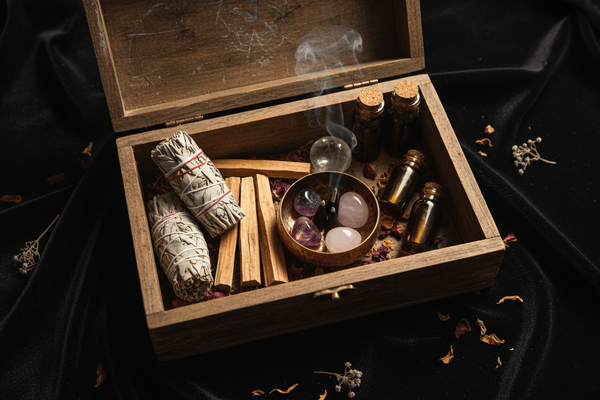
Read article →Creating a Personal Ritual Toolkit: Essential Tools, Oils, and Practices
Read article →Frequently Asked Questions
What counts as a ritual?
A ritual is any repeated action done with intention rather than on autopilot. The difference between a habit and a ritual is presence: brushing your teeth is a habit, but pausing to set an intention before you start your day is a ritual. The action itself matters less than the awareness you bring to it.
Do I need special tools or training to start a ritual practice?
No. The most sustainable ritual practices often start with what you already have: your breath, a few minutes of quiet, or a favorite mug of tea. Tools like oils, stones, or candles can deepen a practice, but they are never required to begin.
How long does it take to build a ritual practice?
There's no fixed timeline, and consistency tends to matter more than duration. Many people notice a felt shift within a few weeks of a short, repeated practice, though this varies widely based on the nervous system and the specific ritual.
What if I miss a day or fall out of practice?
Missing a day does not undo a ritual practice. Ritual is not a performance to get right, it's a relationship you return to. Many practitioners find that the return itself, without judgment, becomes part of the practice.
How does astrology factor into ritual practice?
Astrology offers a personalized map for timing and choosing rituals. Your elemental constitution, the sign your moon falls in, and the current phase of the moon can all point toward which practices are likely to feel most supportive right now, rather than treating every ritual as one-size-fits-all.
How does ritual support nervous system regulation?
Repeated, intentional actions, like lighting a candle at the same time each evening, give the nervous system a predictable cue that it's safe to shift out of alertness and into rest. Over time, this repetition helps the body learn to move more easily between activation and calm.
Rituals to Support You
A few starting points from the LWA line, chosen to pair naturally with a new practice.