
There is a gap between understanding something and actually inhabiting it. You may have read about the chakras, traced their locations on a diagram, recognized your patterns in their descriptions, and still found yourself uncertain of how to actually begin. The knowing sits in the head. The body waits. Chakras daily ritual practice begins precisely in that gap: not with more theory, but with a hand placed on the sternum, a breath taken with intention, a moment of noticing what is actually present rather than what is supposed to be there.
This guide assumes you have already encountered the map. If you want the full theoretical grounding, the integrated chakra and elements hub provides it. What follows is the practice: simple, somatic, element-informed entry points for each of the seven energy centers, along with a structure for building these into a sustainable daily or weekly rhythm.
Three Approaches to Daily Chakra Practice
There is no single correct way to begin. Different people find different entry points more accessible. Three approaches tend to work well for a daily practice.
The first is the body scan: a slow, attentive movement of awareness through the seven centers from base to crown, noticing what is present (sensation, temperature, aliveness, tension, absence) without trying to change anything. Research on body-scan meditation suggests that systematic interoceptive attention may support nervous system regulation and reduce stress reactivity. Even five minutes of quiet, curious inner attention can serve as a calibration for the day.
The second is the elemental offering: choosing one chakra as the day's focus and bringing a simple elemental object or ritual tool into contact with the body at that location. The physical specificity of this approach tends to support people who find purely internal practices difficult to sustain.
The third is intention-setting with a chakra as the entry point: beginning the day by identifying which energy center feels most present as a question or theme. This suits people who benefit from a clear focal point.
Root Chakra: Earth, Safety, and the Settled Body
Element: Earth | Location: Base of the spine and pelvic floor
The Root Chakra governs the body's most fundamental orientation: the felt sense of safety, belonging, and physical presence. A simple Root practice: place both feet flat on the ground, rest your hands on your thighs, and take three slow breaths directing each exhale downward through the legs into the earth beneath you. Notice the weight of the body. Notice what it feels like to be held.
Elemental tool: A grounding anointing oil applied to the soles of the feet or the base of the spine. The Rooted Energy or Back in My Body oils from the anointing oil collection are crafted around this Earth-root correspondence. The Earth Element Ritual Kit offers an extended grounding practice. For more Earth practices, the Earth element ritual guide provides depth.
Sacral Chakra: Water, Flow, and the Creative Body
Element: Water | Location: Lower belly, below the navel
The Sacral Chakra governs creativity, emotional flow, and pleasure. A simple Sacral practice: place both hands over the lower belly, just below the navel. Allow the belly to soften. With each breath, imagine the lower body filling like a tide pool: receiving, holding, releasing. Gentle circular hip movements may support the Water element's natural movement in this center.
Elemental tool: A Water-aligned anointing oil applied to the lower belly with circular, receptive strokes. The Flow of Life or Release to Receive oils offer Water-element support for the Sacral center. The Water Element Ritual Kit provides a fuller sacral practice. For deeper context, the Water element ritual guide is the companion reading.
Solar Plexus Chakra: Fire, Will, and the Empowered Body
Element: Fire | Location: Between the navel and the lower ribs
The Solar Plexus Chakra governs personal power, will, and the digestion of experience. When Manipura is tended, there is a warmth and solidity at the core that supports decisive action. A simple Solar Plexus practice: place both hands flat against the solar plexus. On the inhale, allow the belly and ribcage to expand. On the exhale, notice any tendency to collapse at the center. A short round of rhythmic belly breathing generates heat here and may support a sense of aliveness and agency.
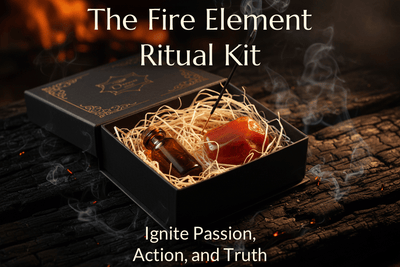
Elemental tool: A Fire-aligned warming oil applied to the solar plexus. The I Am Powerful or Infinite Fire anointing oils are crafted for this center. The Fire Element Ritual Kit extends this practice. For more Fire activation, the Fire element ritual guide provides a full exploration.

Heart Chakra: Air and Integration, the Opening Body
Element: Air (with all four elements present at this threshold) | Location: Center of the chest
The Heart Chakra is the integrating center. It is most often associated with Air's quality of breath, space, and connection, while also carrying the warmth of Fire and the depth of Water. A simple Heart practice: place one hand on the center of the chest and take three full, unhurried breaths. Notice whether the chest is open or guarded. On each exhale, allow the shoulders to release back and down. This gentle postural cue signals to the nervous system that the environment is safe enough to receive.
Elemental tool: For opening and spaciousness, an Air-aligned blend such as Abundant Truth may support the Heart's expressive dimension. For warmth and self-compassion, explore the anointing oil collection for a blend that speaks to what you most need.
Throat Chakra: Air, Voice, and the Truthful Body
Element: Air | Location: The throat, cervical spine, and jaw
The Throat Chakra governs authentic expression: the capacity to speak truth, listen deeply, and let the inner voice find outer form. A simple Throat practice: soften the jaw, part the lips, and take a slow breath in through the nose. Exhale with a soft, open-mouthed sigh. Hum gently on the next exhale, allowing vibration to resonate through the throat and chest. Toning and humming create physical vibration at Vishuddha and may support a sense of opening at this center. For deeper Air practice, the Air element ritual guide provides context.
Elemental tool: An Air-aligned anointing oil applied lightly to the throat or behind the ears. The Tongue of Angels oil is crafted around Air's expressive dimension.
Third Eye Chakra: Ether-Air, Perception, and the Witnessing Body
Element: Ether-Air | Location: Center of the forehead, between the eyebrows
The Third Eye Chakra governs perception, intuition, and the capacity to see patterns. A simple Third Eye practice: close your eyes and bring gentle attention to the space behind the center of the forehead. No visualization is required. Simply notice what is there. Breathe slowly. Allow the quality of awareness itself to be the practice, neither analyzing nor dismissing what arises, simply witnessing.
Elemental tool: A drop of clarifying anointing oil applied to the third eye point before meditation. The Abundant Truth oil, crafted with Air's clarifying botanicals, may serve as a ritual tool for this center's opening.
Crown Chakra: Space-Ether, Openness, and the Receptive Body
Element: Ether-Space | Location: The top of the skull and the field above it
The Crown Chakra governs connection to the larger field. Working with the Crown is less about doing than about receptivity. A simple Crown practice: after moving awareness through the lower six centers, allow attention to rise naturally to the top of the skull. Offer a breath upward through the central channel of the body. Rest in the quality of openness, however brief, that follows a long, complete exhale. Explore the Anointing Oils collection for blends that support a more open and receptive state.
Building a Weekly Practice: One Chakra Per Day
One of the most sustainable structures is a seven-day rotation: one chakra per day, engaged with through its elemental tool and a brief body scan at the start or close of the day. A suggested rotation: Root (Monday), Sacral (Tuesday), Solar Plexus (Wednesday), Heart (Thursday), Throat (Friday), Third Eye (Saturday), Crown (Sunday). This structure is a suggestion, not a prescription. Some people find following the chakra that most calls for attention each day creates a more responsive practice. Notice which approach feels more generative.
For the complete theoretical framework underlying this practice, the integrated chakra and elements hub is the reference document to return to as your practice deepens. And for the foundation that supports all elemental practice, the four elements pillar is always there to orient you.
For the embodied side of daily chakra practice, the guide to somatic ritual grounds this energetic work in the body.